DOHA, QATAR — Diplomatic efforts to resolve the ongoing conflict between the United States and Iran are in an intensive, slow-moving phase, according to US Secretary of State Marco Rubio. Speaking to reporters amid high-stakes mediator-led discussions in Doha, Qatar, Rubio sought to manage expectations, suggesting that while the Trump administration remains willing to secure a durable pact, a breakthrough is not immediately on the horizon.
“There were some talks going on in Qatar today, so we’ll see if we can make progress,” Rubio said, referring to the back-and-forth negotiations currently being facilitated by Qatari intermediaries. “I think it’s a lot of talking back and forth going on about specific language in the initial document, so it’ll take a few days.”
Reflecting on the president’s posture, Rubio added, “The president expressed his desire to make it. He’s either going to make a good deal or no deal.”
The comments come at a highly volatile moment, as both governments seek to define the terms of a potential settlement that would lift the economically crippling US naval blockade of the Strait of Hormuz in exchange for Iranian security concessions. While the Trump administration has signaled some satisfaction with the general direction of the dialogue, the reality on the ground—and on the high seas—remains fraught with risk.
Military Standoff Casts a Shadow Over Diplomacy while diplomats in Doha pore over draft agreements, the military forces of both nations remain locked in a tense, heavily armed standoff in and around the Gulf of Oman and the Arabian Sea.
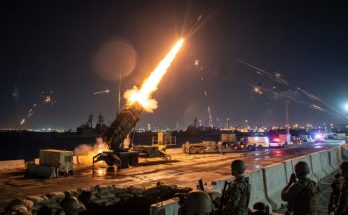
A senior US military official confirmed that the US Navy has deployed dozens of warplanes and nearly two dozen warships—including two aircraft carrier strike groups and their escort ships—to enforce the strict maritime blockade, which is designed to halt the transit of vessels entering or leaving Iranian ports.
However, this imposing naval cordon has faced direct challenges. According to the defense official, Iranian surface-to-air missile systems have repeatedly targeted and threatened American aircraft operating in the area.
These incidents represent just the latest in a series of low-level clashes between US and Iranian forces that have persisted since a fragile ceasefire was enacted approximately six weeks ago. The fact that such hostilities are continuing even as Iranian officials gather in Qatar underscores the high stakes—and the immense fragility—of the current diplomatic process.
Iranian Officials Warn Against ‘Imminent’ Breakthrough Expectations the perspective from Tehran suggests that while some progress is being made, significant obstacles remain before any document can be signed.
Iranian Foreign Ministry spokesperson Esmaeil Baqaei, speaking during a weekly news briefing, acknowledged that the two sides have managed to find common ground on various topics. “It is correct to say that we have reached a conclusion on a large portion of the issues under discussion,” Baqaei said.
However, he was quick to temper optimism, warning that a final deal is by no means guaranteed or imminent. “But to say that this means the signing of an agreement is imminent—no one can make such a claim,” Baqaei stated. He also accused the US of shifting its positions during the negotiations, adding a layer of public friction to the sensitive talks.
The central source of the diplomatic deadlock appears to be a condensed, two-day implementation plan proposed by Iran, which would require the United States to lift its naval blockade, waive sanctions on Iranian oil, and cancel newly imposed economic penalties in exchange for Iran reopening the Strait of Hormuz.
The US has repeatedly balked at this sequencing, with Rubio previously characterizing Iranian demands as “outrageous and ridiculous and really not realistic.” For its part, Tehran has argued that its condensed timetable is the most practical way forward, putting the onus on Washington’s “political rationality” to break the impasse.
The Trump Administration’s Leverage and Terms despite the public sparring, senior US officials believe that the sustained military and economic pressure has altered Tehran’s calculus. One official noted that Iran appeared “more open to making deals now than it did before the military operation” that preceded the current blockade.
The Trump administration’s terms for a final agreement are expected to be exacting. Beyond the core trade-off of lifting the maritime blockade in exchange for the reopening of the Strait of Hormuz, Washington is likely to push for stringent, verifiable guarantees regarding Iran’s regional military activity and nuclear capabilities.
Under previous frameworks, the US has insisted on substantial concessions, including the delivery of enriched uranium and the limitation of operational nuclear facilities, alongside strict compliance monitoring. Given these demanding requirements, many observers believe the Qatari-mediated talks will continue to face major hurdles.
The high-stakes diplomacy in Qatar continues to be watched closely by global markets and regional allies alike. Reopening the Strait of Hormuz—a vital maritime conduit for a significant portion of the world’s daily oil and gas consumption—would provide much-needed stability to global energy supply chains. However, as Secretary of State Rubio’s cautious assessment suggests, turning the current fragile ceasefire into a lasting peace remains a complicated, day-by-day endeavor.
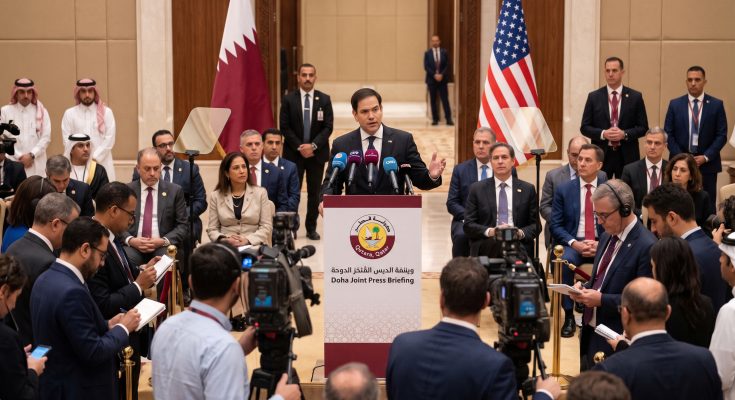
State Department Briefing addressing a packed press corps in Doha, Qatar, US Secretary of State Marco Rubio provides an update on the complex, Qatari-mediated negotiations to resolve the ongoing US–Iran conflict.
Let’s check the captured moment below: US Secretary of State Marco Rubio addresses the press on the Qatari-mediated negotiations.